Light Year Conversion Calculator: Convert LY to KM, Miles & AU
Convert light years to kilometers, miles, AU, and parsecs instantly with this accurate Light Year Conversion Calculator. Simple, fast results with examples and FAQs.
Standard Form
Expanded Full Form
1 LY = 9.4607 × 10¹¹² KM
Use Other Utilities Category Calculators
What Is This Calculator?
The Light Year Conversion Calculator is an easy-to-use online tool that converts astronomical distances from light years (LY) into familiar units such as kilometers (km), miles (mi), astronomical units (AU), and parsecs (pc). It is designed for students, teachers, astronomy enthusiasts, bloggers, science learners, and anyone curious about cosmic distances. Since light years represent incredibly large distances, manual calculations can be overwhelming. This calculator simplifies everything into a single, fast, accurate conversion, making astronomy more accessible to a global audience.
Understanding Light Years: Clear Explanations and Key Concepts
What Is a Light Year?
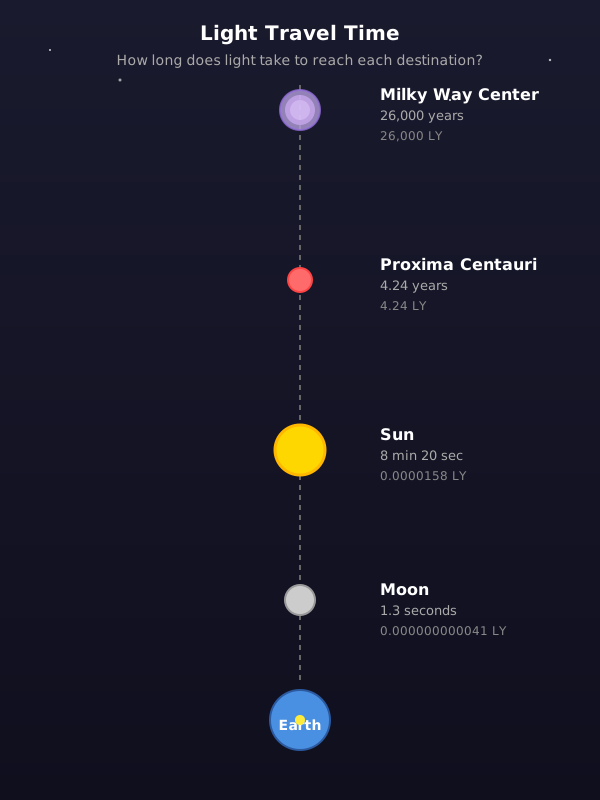
A light year is the distance that light travels in one year in a vacuum. Light moves at a constant speed of approximately 299,792 kilometers per second (km/s).
1 Light Year ≈ 9.46 trillion kilometers
or
1 Light Year ≈ 5.88 trillion miles
It is not a unit of time, even though it contains the word "year." It is purely a unit of distance, used because space is so vast that everyday units like kilometers or miles become impractically large.
Why Do We Convert Light Years?
Light years are helpful for astronomy but not always intuitive for beginners. People convert light years to other units for:
- Understanding distances between stars and galaxies
- Educational purposes, especially physics and space science
- Research writing and scientific communication
- Comparing cosmic distances with familiar measurements
- Explaining astronomy to students or the general public
For example, saying "Proxima Centauri is 4.24 light years away" is useful to astronomers. But a student may want to understand it in kilometers or astronomical units.
Light Year Conversion Formulas
Light Year to KM Conversion Formula
Light travels approximately 299,792 km every second.
1 Light Year = 9.4607 × 10¹² kilometers
Distance in km = Light Years × 9.4607 × 10¹²
Example: 2 LY ≈ 2 × 9.4607 × 10¹² km = 1.89214 × 10¹³ km
Light Year to Miles Conversion Formula
Light travels approximately 186,282 miles per second.
1 Light Year = 5.8786 × 10¹² miles
Distance in miles = Light Years × 5.8786 × 10¹²
Light Year to AU Conversion Formula
1 Astronomical Unit (AU) = average distance between Earth and the Sun.
1 LY = 63,241 AU
AU = Light Years × 63,241
Light Year to Parsecs Conversion Formula
Parsec is another astronomical distance unit commonly used by professional astronomers.
1 LY = 0.306601 parsecs
Parsecs = Light Years × 0.306601
Quick Conversion Reference
| Unit | Value |
|---|---|
| 1 Light Year | 9.46 × 10¹² km |
| 1 Light Year | 5.88 × 10¹² miles |
| 1 Light Year | 63,241 AU |
| 1 Light Year | 0.3066 parsecs |
This reference helps users quickly understand the scale of cosmic distances.
Conversion Table: LY to KM, Miles, AU, Parsecs
| Light Years | Kilometers (km) | Miles (mi) | AU | Parsecs (pc) |
|---|---|---|---|---|
| 1 | 9.46 × 10¹² | 5.88 × 10¹² | 63,241 | 0.3066 |
| 5 | 4.73 × 10¹³ | 2.94 × 10¹³ | 316,205 | 1.533 |
| 10 | 9.46 × 10¹³ | 5.88 × 10¹³ | 632,410 | 3.066 |
| 50 | 4.73 × 10¹⁴ | 2.94 × 10¹⁴ | 3,162,050 | 15.33 |
| 100 | 9.46 × 10¹⁴ | 5.88 × 10¹⁴ | 6,324,100 | 30.66 |
Comparison With Real Space Distances
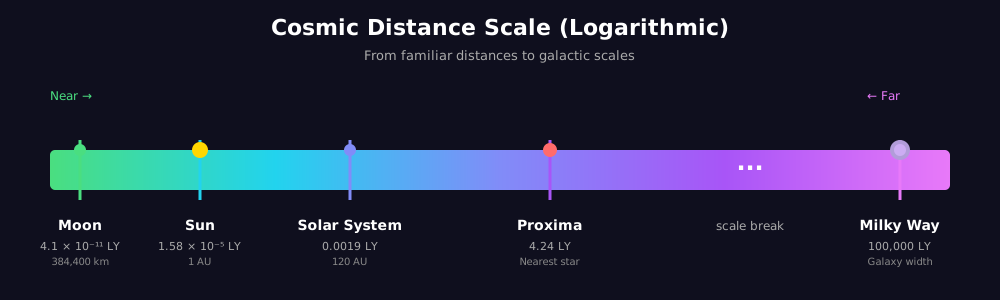
Light years help illustrate the enormous scale of space. Here's how they compare to familiar cosmic objects:
1. Distance to the Moon
- 384,400 km
- 0.0000000000407 light years
- Extremely tiny compared to a light year.
2. Distance to the Sun
- 1 AU (150 million km)
- 0.0000158 light years
3. Size of the Solar System
The heliosphere (solar bubble) extends:
- ~120 AU
- ~0.0019 light years
- So our entire solar system is less than 1/500th of a light year wide.
4. Distance to Andromeda Galaxy
- ~2.5 million light years
- So even at light speed, it would take 2.5 million years to reach our nearest large galaxy.
These comparisons help beginners understand why astronomers use light years.
LY vs AU vs Parsecs: What's the Difference?
Light Year (LY)
Distance light travels in a year. Used to describe distances between stars.
Astronomical Unit (AU)
Distance from Earth to the Sun. Used within our solar system.
Parsec (pc)
Unit used in professional astronomy, based on parallax. 1 pc ≈ 3.26 LY
Simple Comparison
- 1 AU = 150 million km
- 1 LY = 63,241 AU
- 1 pc = 3.26 LY
How to Use the Light Year Conversion Calculator (Step-by-Step)
- Enter the number of light years you want to convert into the input field.
- Choose the unit you want to convert to: km, miles, AU, or parsecs.
- The calculator instantly shows the converted value.
- Use the swap button to reverse the conversion (e.g., KM → LY).
- Adjust the value anytime to get new results instantly.
This simple design ensures quick results for students, teachers, and space enthusiasts.
Real Examples
Example 1: Convert 1 Light Year to KM & Miles
- 1 LY = 9.46 × 10¹² km
- 1 LY = 5.88 × 10¹² miles
This gives the best basic understanding of cosmic distances.
Example 2: Distance to Proxima Centauri (4.24 LY)
Proxima Centauri is the closest star to our Sun.
In Kilometers:
4.24 × 9.4607 × 10¹² km = 4.01 × 10¹³ km
In Miles:
4.24 × 5.8786 × 10¹² miles = 2.49 × 10¹³ miles
So even the nearest star is more than 40 trillion km away.
Example 3: Convert 10 Light Years to AU
10 LY × 63,241 AU = 632,410 AU
So 10 LY is over 600,000 times the distance between Earth and the Sun.
The Light Year Conversion Calculator makes astronomy easy for everyone, whether you're a student completing homework, a teacher preparing lessons, a blogger simplifying science, or simply someone curious about the universe.
References
This calculator uses scientifically verified light year conversion factors from authoritative sources: light year conversion factors from authoritative sources:
- International Astronomical Union (IAU) – Standard definitions for astronomical distances
- NASA – Space measurement standards and cosmic distance scales
- Encyclopaedia Britannica – Light year definition and scientific context
Frequently Asked Questions

Amit Kulkarni
Founder & Editor-in-Chief
Software engineer with 7 years of experience building accurate, reliable calculators. Committed to providing expert-verified tools for finance, health, education, and utilities.